On Demand Cancer Care impact report focuses on insightful metrics on patient satisfaction, symptom resolution, and heartwarming quotes from our dedicated oncology providers
“Reimagine Care has helped reduce the number of acute care visits during the day, reducing schedule interruptions and allowing providers to see more patients. It has also provided our patients comfort and reassurance that they can have their questions and needs addressed in a timely manner,” shares a Medical Oncologist at a Community Health System.
Reimagine Care is excited to share the Q1, 2024 impact report found below.
In this data story, we share insightful metrics on patient satisfaction, symptom resolution, and heartwarming quotes from our dedicated oncology providers.
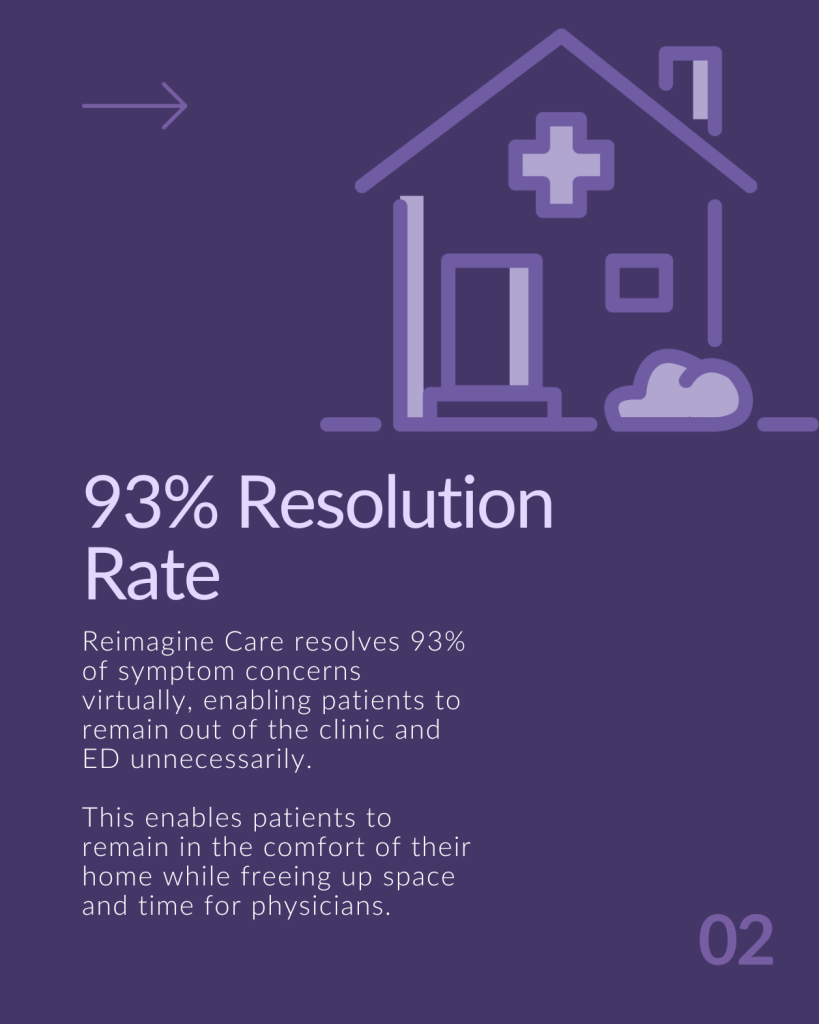
Symptom Resolution: Our innovative care solutions are making a real difference, with significant improvements reported in patient symptom management. We are keeping more and more patients from visiting the emergency department or needing to travel for unscheduled clinic visits by resolving their concerns virtually.
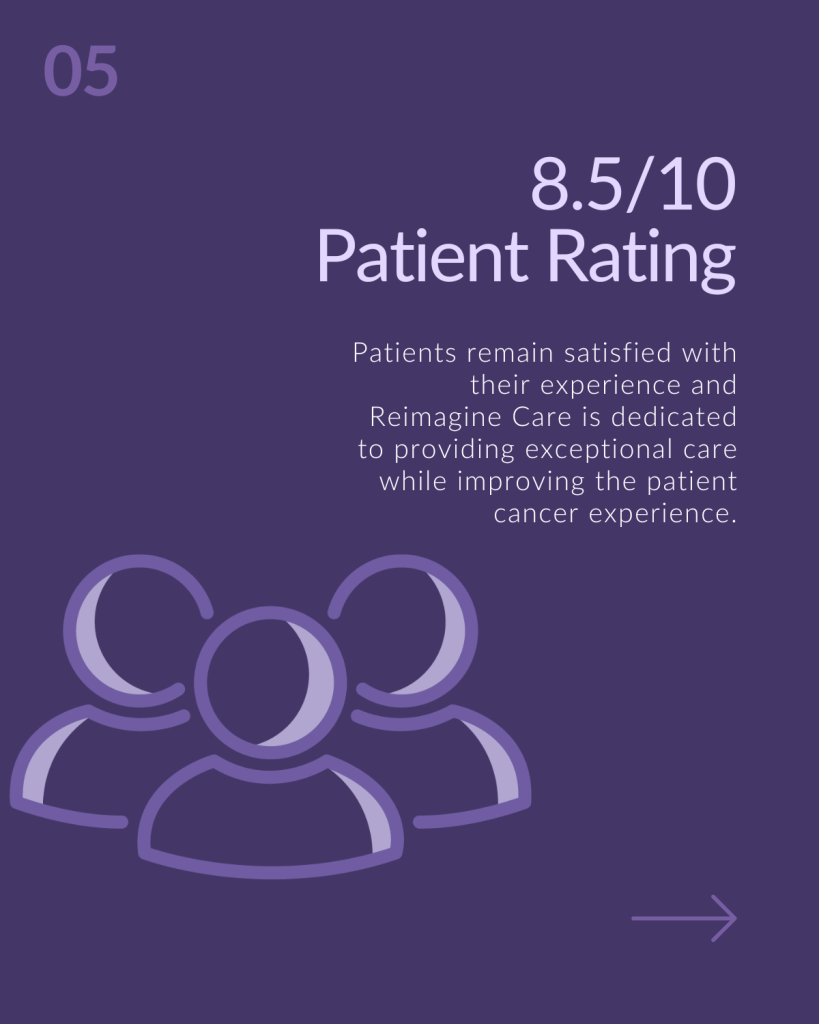
Patient Satisfaction: Our patients have rated us an impressive 8.5/10! We are grateful for their trust and feedback, which drives us to continually improve our services.
Provider Perspectives: Hear directly from oncology providers about their experiences and the positive changes they’ve witnessed in patient care.
Extending care beyond the clinic is proven to positively impact patients and providers alike. Dr. Pallav Mehta, Medical Director for Reimagine Care shares, “With the now rampant workforce challenges throughout healthcare, hiring qualified nurses and nurse practitioners is no easy feat. As such, leveraging the virtual space and embracing innovation not just in the direct treatment of cancer, but also in the day-to-day operational workflows of a cancer center will be instrumental in reducing provider burnout moving forward.”
He continues, “Reimagine Care’s team of clinical oncology experts and smart technologies provide a lifeline. By acting as a 24/7 extension of the practice clinically and operationally, we are allowing oncologists to spend more time with patients and less time managing all other tasks that contribute to burnout.”