When a cancer patient’s leg swells unexpectedly, every minute matters. In these moments, rapid access to clinical assessment can be critical. Yet it doesn’t always mean patients must call 911 immediately, which can result in expensive ambulance rides and ER visits. Reimagine Care’s AI-powered, text-based virtual support, Remi, is helping patients receive timely attention by allowing oncology-trained clinicians to evaluate visual symptoms remotely and coordinate appropriate care, often preventing unnecessary emergency room visits and ensuring treatment decisions are made with speed and precision.
Our AI-powered, text-based virtual support is transforming how complications are detected and addressed, allowing oncology-trained clinicians to assess visual symptoms in real time and coordinate rapid interventions—often without requiring an emergency room visit.
A Swollen Leg and a Smarter Way to Respond
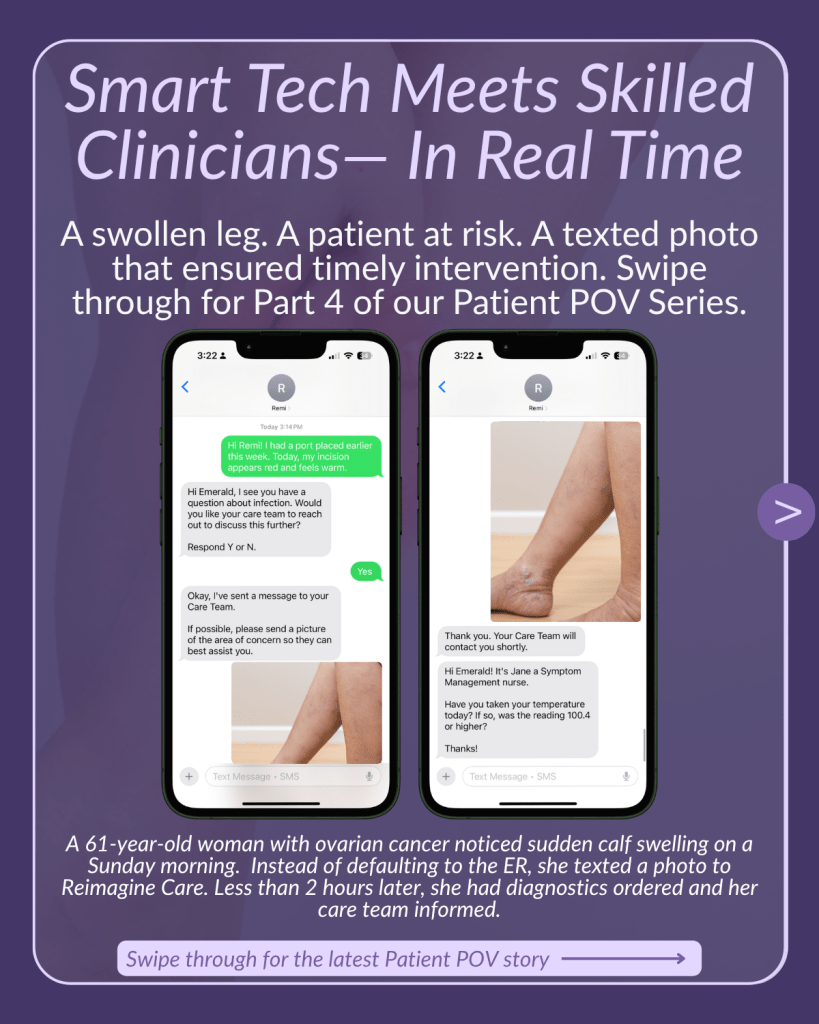
One morning, a 61-year-old woman recovering from ovarian cancer surgery noticed her left calf had swollen dramatically overnight. She had previously experienced a blood clot and immediately recognized the potential danger. While she understood the seriousness of the symptoms, she also hesitated to visit the emergency room, dreading the long wait and uncertainty.
Her risk was especially high. She recently stopped a six-month course of anticoagulation therapy per protocol and was currently undergoing cisplatin chemotherapy followed by Keytruda immunotherapy, both of which elevate clotting risk.
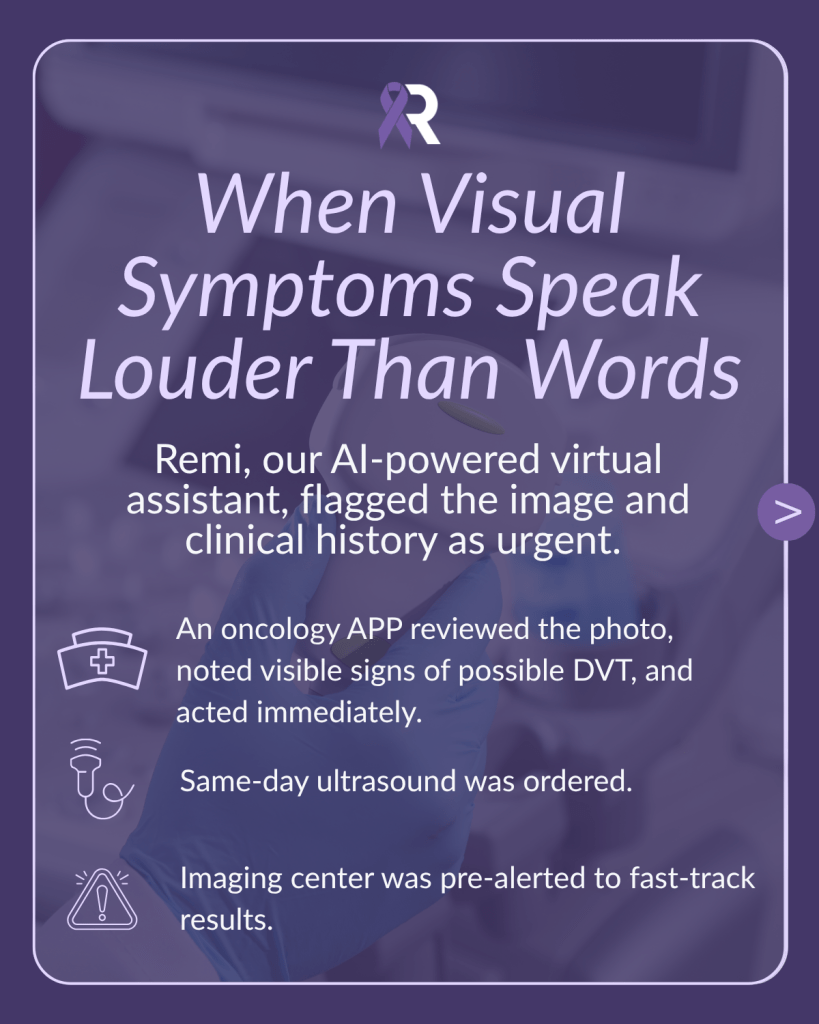
Instead of heading to the ER, she used her phone to take a picture of her leg and sent it through Reimagine Care’s text-based support system. Within moments, Remi recognized the urgency and escalated the case to an oncology-specialized advanced practice provider.
Seeing What Can’t Be Heard
The image she submitted became a critical piece of her clinical picture. The provider was able to assess the severity of the swelling, observe subtle changes in skin color, and identify visible indicators of a possible clot – insights that would not have been possible through verbal description alone.
Given the visual evidence and her medical history, the clinician took immediate action: ordering same-day diagnostics, coordinating with a medical assistant to secure an afternoon ultrasound appointment, and instructing the imaging center to fast-track results to the care team.
From the moment she sent her photo to the time her test was scheduled, less than two hours had passed.
Diagnosis Without Delay
By the next day, the ultrasound confirmed what the care team suspected. New clots had formed. Her provider restarted anticoagulation therapy with Eliquis immediately, without the delays or complications of an emergency room visit or hospital admission.
She later reflected on the experience with a sense of relief. The rapid coordination, streamlined process, and clarity of care had restored her treatment path with minimal disruption, all while she remained in the comfort of her home.
A New Standard for Complication Detection
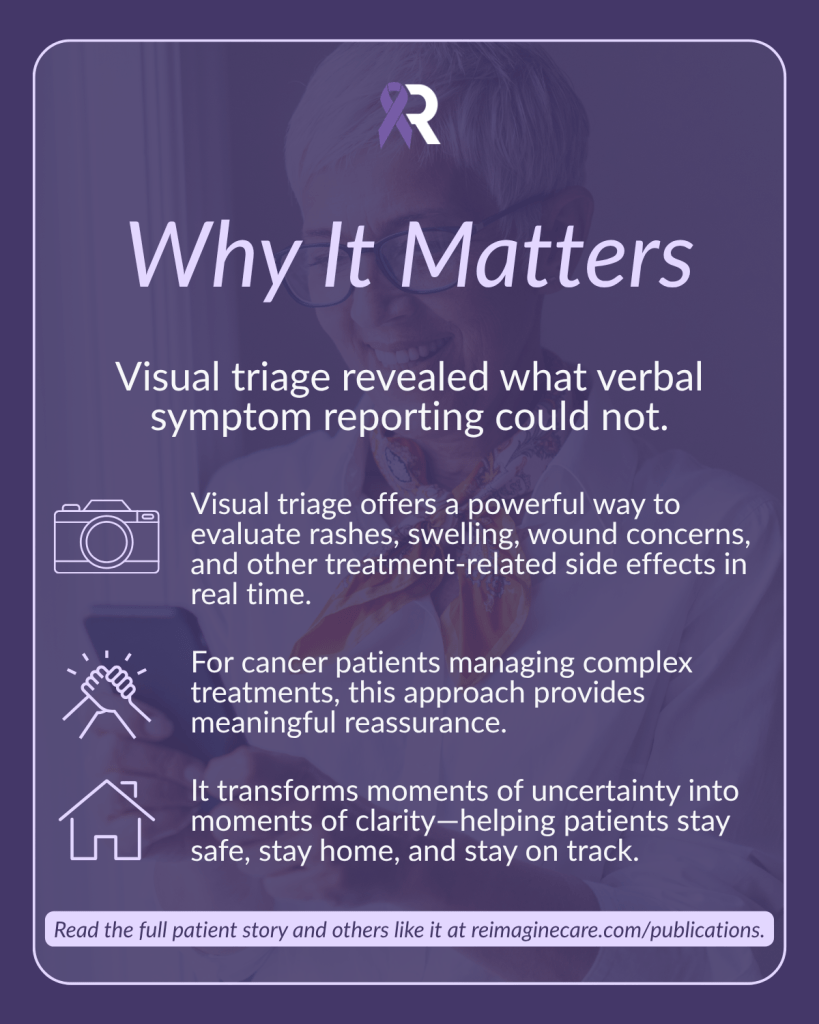
Some symptoms can’t be explained. They need to be seen. Visual triage offers a powerful way to evaluate rashes, swelling, wound concerns, and other treatment-related side effects in real time. When clinicians can observe visible symptoms remotely, they’re able to make more confident and timely decisions, avoiding default emergency care “just in case.”
Studies show that pairing visual triage with direct diagnostic ordering can reduce time to diagnosis for visible complications by up to 70%, and cut unnecessary emergency visits by 30–40% for select conditions.
Virtual Care That Brings Support Into the Moment
Reimagine Care’s SMS-based platform is built to remove barriers – no app downloads, no logins, just secure and intuitive messaging. With 90% of patients engaging in the first month, and the ability to send images directly through text, patients gain immediate access to clinical expertise without the friction of traditional systems. The AI assistant collects structured data and images, enabling clinicians to focus on what matters most: timely response and personalized care.
For cancer patients managing complex treatments, this approach provides meaningful reassurance. It transforms moments of uncertainty into moments of clarity—helping patients stay safe, stay home, and stay on track.
This story is part of our 4-part Patient POV series exploring how cancer patients are finding support through AI-powered, text-based virtual care. Visit ReimagineCare.com to learn more.