
When chemotherapy side effects spiral out of control, patients face an impossible choice: suffer at home or risk an exhausting hospital visit. Here’s how a 90-second virtual exchange with the Reimagine Care team transformed this terrifying moment for a patient living with cancer.
When Chemotherapy Nausea Strikes Without Warning
For a 48-year-old woman with triple-negative breast cancer who was undergoing aggressive AC-Keytruda treatment, the nausea hit like a tidal wave during her second cycle.
“By lunch I was on the bathroom floor, convinced the ER was next.”
If you’re in treatment, you know that panic.
At 12:52 PM on what should have been a routine Wednesday, she found herself unable to keep anything down, growing increasingly dehydrated, and feeling desperate for relief. Like many cancer patients, she faced a common dilemma: suffer at home or endure an exhausting emergency room visit that might expose her immunocompromised system to additional risks.
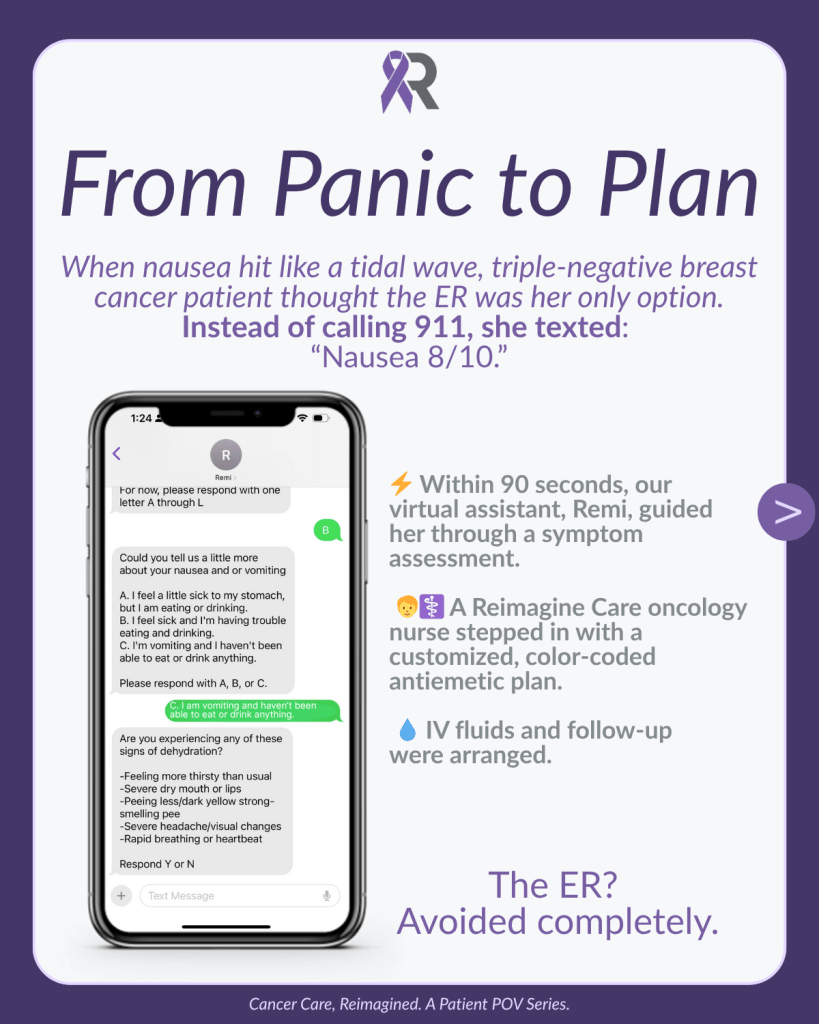
Instead of calling an ambulance, she sent a simple text message: “Nausea 8/10” to Reimagine Care’s text-based cancer support system.
Within minutes, Remi—the AI-powered virtual assistant—guided her through targeted questions designed by oncology specialists to assess her situation. This structured assessment took less than two minutes to complete—crucial when every movement triggers more nausea.
A specialized oncology triage nurse reviewed her responses and quickly identified the issue: though the patient had both ondansetron and phenergan available, she didn’t understand how to effectively combine them for maximum relief.
The nurse responded through the same text thread with a clear, color-coded antiemetic schedule: ondansetron every eight hours, phenergan every six hours staggered between ondansetron doses, with specific instructions for around-the-clock administration regardless of whether she felt nauseated. Additionally, the nurse provided evidence-based guidance on hydration strategies and arranged next-day IV fluids with IV Kytril infusion.
Preserving Cancer Treatment Schedules Through Virtual Support
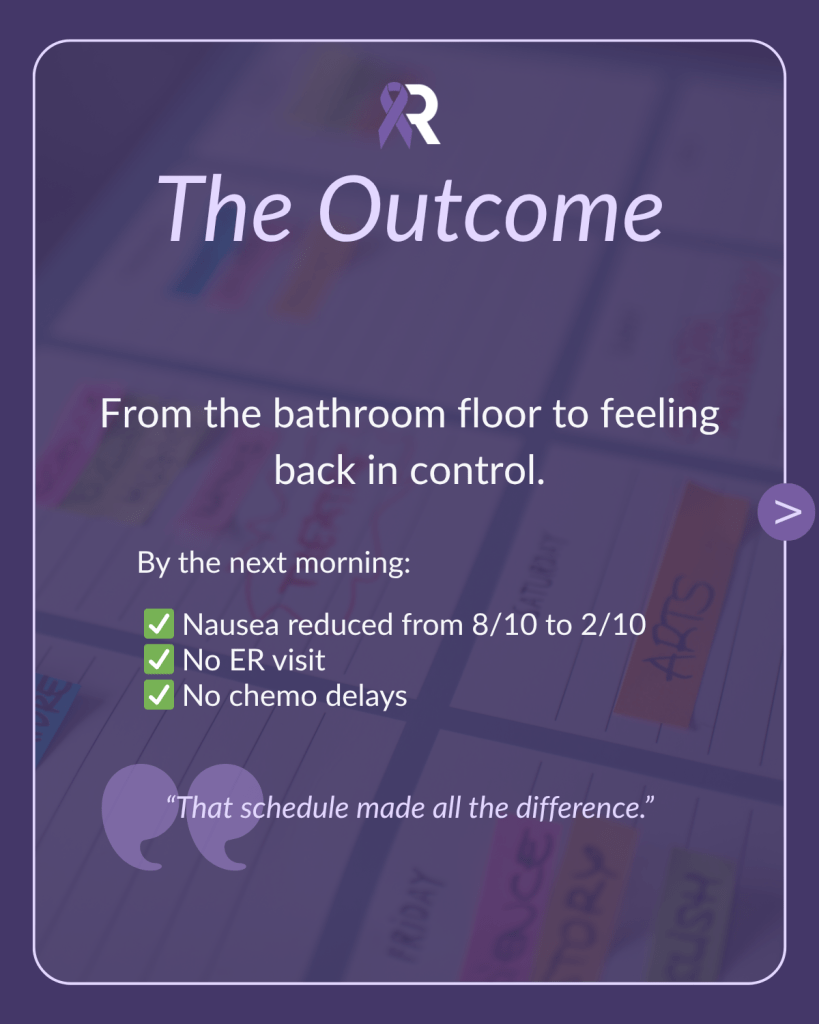
By the following morning, the patient reported her nausea score had dropped dramatically from 8/10 to 2/10. More importantly, she avoided an emergency room visit and maintained her scheduled infusion timeline.
“Those anti-nausea instructions were exactly what I needed,” she later shared. “Having a precise medication schedule made all the difference—I went from thinking I needed hospitalization to feeling back in control by morning.”
This case illustrates why timely intervention for chemotherapy side effects is crucial. Research shows that nausea and vomiting are among the leading causes of preventable emergency department visits among cancer patients, costing the healthcare system billions annually.
When patients can adhere to their treatment schedules without interruptions or delays, their therapy has the best chance of success. Better symptom control through virtual cancer care allows patients to maintain daily activities, reduce the overall burden of cancer treatment, avoid costly emergency department visits, and stay on their prescribed treatment schedule.
What makes these success stories possible isn’t just clinical expertise—it’s the thoughtful integration of technology and clinician support that removes barriers to care. Smart symptom assessment tools, like AI-powered SMS text, can complete thousands of interactions daily, freeing clinicians to focus on complex problem-solving and meaningful patient connections.
Statistics show that 98% of symptom episodes like this can be managed remotely when patients have direct access to specialized oncology clinicians without barriers to communication.
For cancer patients, having expert guidance available through a simple text message creates a safety net that transforms how they experience treatment. The result is profound: fewer crises, lower healthcare costs, and most importantly, patients experiencing something often lost in cancer treatment—a sense of control when life feels anything but predictable.


*This story is part of our 4-part Patient POV series exploring how cancer patients are finding support through text-based virtual care. Visit ReimagineCare.com to learn more about its virtual oncology care model.*