“The faucet kept dripping, but my bank account drained faster.” When cancer strikes, medical bills aren’t the only threat to survival. Discover how a simple text message is becoming the lifeline for patients drowning in financial toxicity—and why what happens in your wallet may impact what happens in your body.
Financial Struggles During Cancer Treatment: A Patient’s Story
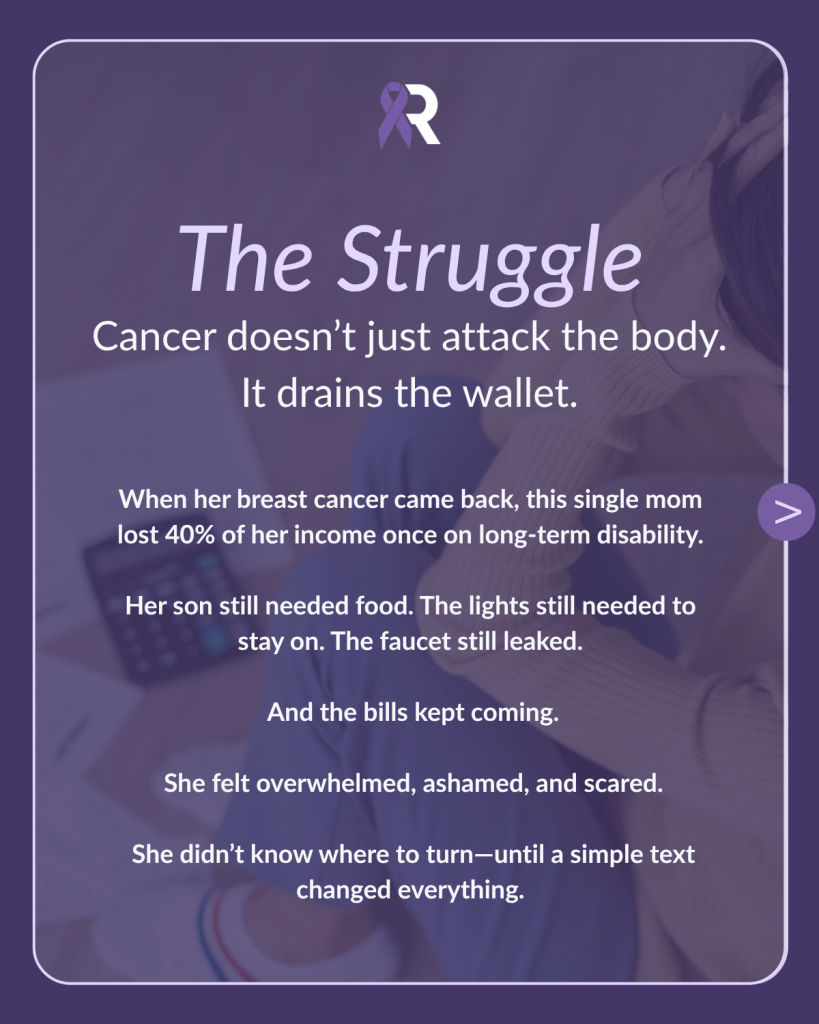
A 49-year-old single mother facing breast cancer recurrence found herself caught in a financial spiral. After her cancer returned in early 2023, she was forced onto long-term disability, slashing her household income by 40%.
“The faucet kept dripping, but my bank account drained faster.”
If you’re in treatment, you know that panic.
While supporting her teenage son alone, she juggled mounting utility bills, necessary home repairs, dwindling food supplies, and intensive cancer treatment appointments.
During what seemed like a routine symptom check through Reimagine Care’s AI-supported virtual cancer care model, the virtual assistant named Remi asked three simple questions that made all the difference: Is your housing situation stable? Do you have reliable access to food? Are your utilities at risk of disconnection?
Her response was revealing: “Water leaks + struggling for food + electricity threatened.”
These social determinants of health factors often go unaddressed in traditional fifteen-minute oncology appointments. The beauty of text-based cancer care is that patients often feel more comfortable disclosing financial struggles in writing than face-to-face, where shame might prevent honest answers.
Financial Support as Medical Care in Cancer Treatment
Within hours of her text response, a dedicated social worker reached out. Unlike traditional cancer care models where patients might wait days or weeks for assistance with non-medical needs, this intervention happened almost immediately.
The oncology social work team connected her with multiple community resources, helped complete applications for rental assistance, secured utility relief funding, and arranged food support services. Within just a few days, she received grants covering over $400 of her electric bill—eliminating the immediate threat of service disconnection.
“It’s been a Godsend,” she reflected weeks later. “I’m so thankful someone saw how overwhelmed we were.”
Financial toxicity is a medical issue in cancer care. When patients worry about basic necessities, their bodies experience increased stress hormones that can interfere with healing. Studies show that financial stress in cancer patients correlates with poorer adherence to treatment plans, increased symptom severity, higher rates of cancer recurrence, and decreased survival rates.
What makes these success stories possible isn’t just clinical expertise—it’s the thoughtful integration of text-based cancer care technology that removes barriers to support. Native SMS messaging requires no apps to download and no passwords to remember, resulting in 90% of patients engaging within their first month. Smart screening tools integrated into routine symptom checks identify problems before they become crises, while rapid referral pathways connect patients directly to community resources.
For this patient, a simple text exchange uncovered critical needs that might otherwise have remained hidden. Through accessible technology that patients can use without special apps or complicated logins, important non-medical factors affecting cancer outcomes become visible and addressable.
The result is profound: lower healthcare costs, better treatment adherence, and most importantly, patients experiencing something often lost in cancer treatment—a sense of control when life feels anything but predictable.
*This story is part of our 4-part Patient POV series exploring how cancer patients are finding support through text-based virtual care. Visit ReimagineCare.com to learn more about its virtual oncology care model.*